You want your Santa Clarita acreage to live like a private resort without turning into a full-time job. With hot, dry summers, water budgets, rolling terrain and wildfire risk, your outdoor plan has to be beautiful and practical. In this guide, you’ll learn how to design patios, pools, kitchens, arenas and gardens that suit our climate, meet local rules and stay easy to maintain. Let’s dive in.
Know your site and climate
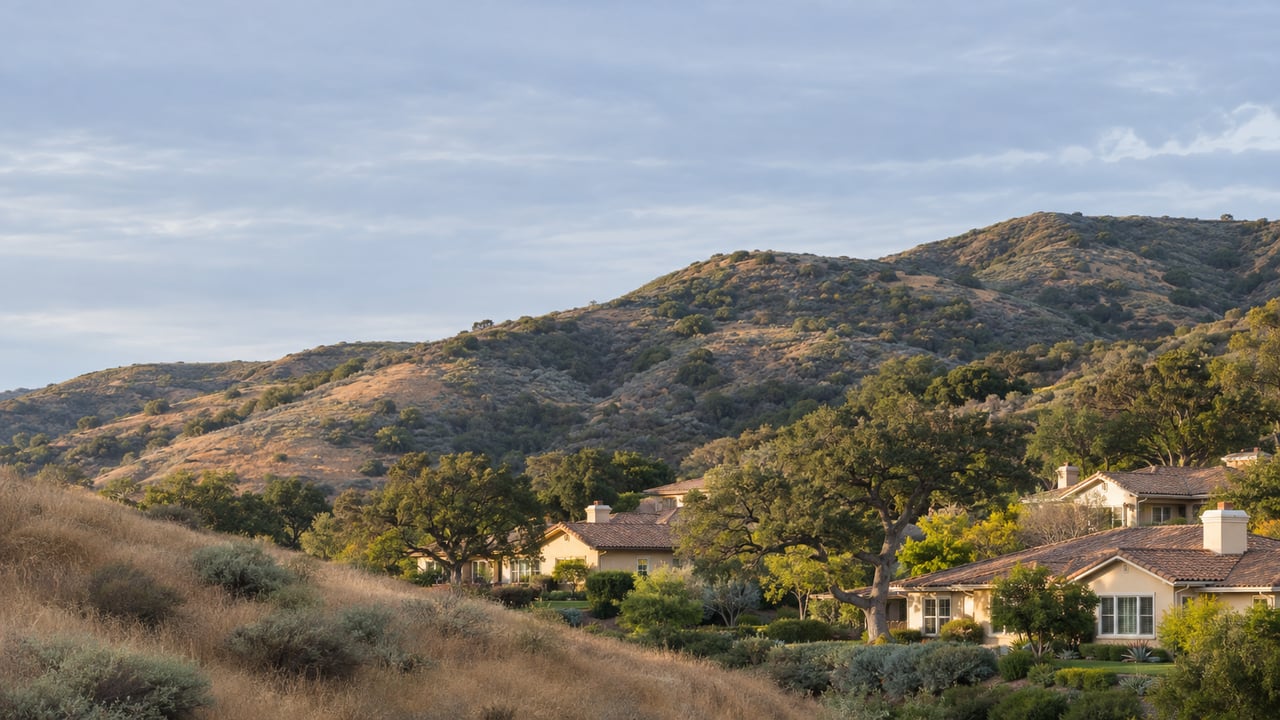
Santa Clarita’s summers run hot and dry, with most rain arriving in winter. That pattern shapes everything from shade placement to materials. Review local temperature and rainfall patterns so you plan for summer heat and winter runoff. You can confirm averages and seasonal shifts using the City’s climate summary for context on heat waves and rainfall timing. See the Santa Clarita climate overview.
SCV Water uses evapotranspiration to set outdoor water budgets. That means your plants will need more water in summer and far less in winter. Group plants by water needs, and size irrigation zones accordingly. You can find local allocation and scheduling guidance on SCV Water’s Water Smart page.
Many ranch parcels sit on slopes or along canyon edges. Before you commit to a layout, think through drainage, access and erosion control. Larger regrading and arena pads often need engineering review. The City’s Engineering Services page outlines grading and drainage expectations for bigger work. Start with Engineering Services.
Design with wildfire in mind
Parts of the Santa Clarita Valley fall into High or Very High Fire Hazard Severity Zones. That can affect material choices, defensible space and plan review for new work. Check recent map updates for Los Angeles County to learn how your parcel is designated. Use the FHSZ update notice as a starting point.
Follow defensible-space best practices from CAL FIRE. Keep the first 0 to 5 feet next to structures clear of combustible plants and mulch, maintain a lean and green zone 5 to 30 feet out, and reduce fuels 30 to 100 feet from buildings where required. Get familiar with home-hardening and ember-resistance basics on CAL FIRE’s prepare page, and review California’s defensible space law, PRC §4291.
Covered patios and shade
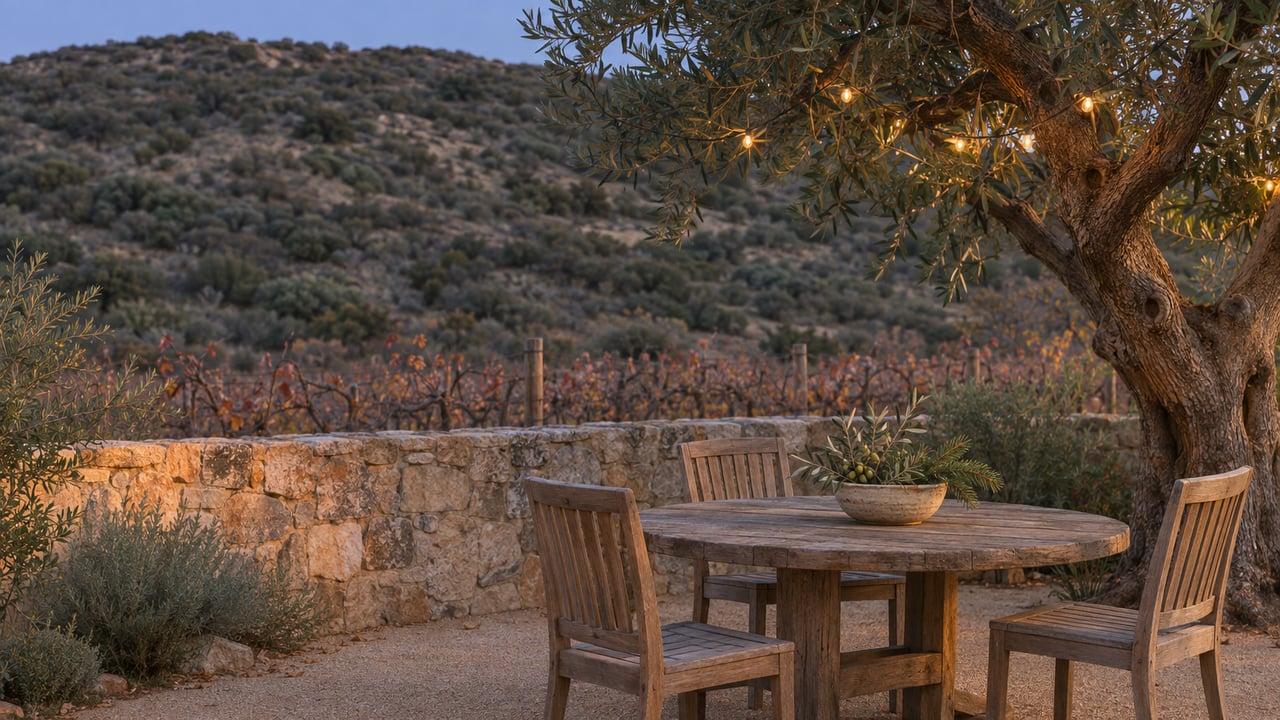
Thoughtful shade makes your property livable in late afternoons. Prioritize west and southwest exposures to block low-angle sun. Catch breezes with openings or wide overhangs, and keep main seating areas near the house to simplify utilities and maintenance.
In higher fire zones, select ignition-resistant or noncombustible roofing and trim. Avoid wood shakes and combustible groundcovers right next to walls. Keep gutters and roof valleys free of debris, and use ember-resistant vents where applicable. You can find home-hardening and zone guidance through CAL FIRE’s prepare page.
For low upkeep, choose durable materials like metal, tile or fiber-cement for exposed elements. Specify fade-resistant fabrics and plan drainage so water does not pool under the cover. These choices cut maintenance and support long-term value.
Pools and water amenities
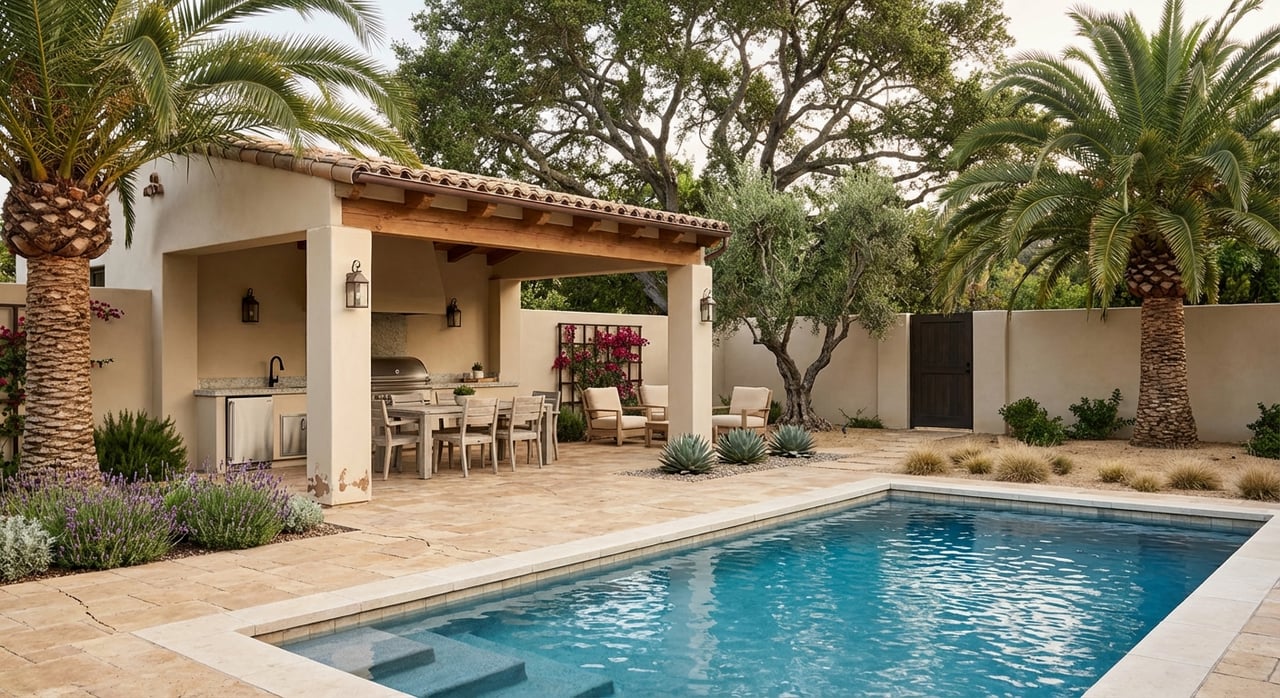
Pools are water intensive, and local allocation programs can affect filling and refilling, especially in drought years. Plan for a high-quality cover to reduce evaporation and chemical loss, and confirm outdoor water budgets before you break ground. SCV Water outlines allocations and conservation options on its Water Smart page.
Expect plan review for equipment, electrical and plumbing, and standard barrier requirements for safety. While you must follow Santa Clarita’s exact rules, barrier basics typically include minimum fence height and self-closing, self-latching gates. For context on typical safety features, see this example of residential pool barrier standards and verify local specifics with the City.
For placement, avoid overhanging flammable trees and keep decking edges in compliance with defensible space. Consider wind patterns to reduce heat loss and debris.
Outdoor kitchens and lounges
Permanent outdoor kitchens with gas, electrical or plumbing usually require permits and licensed contractors. You will plan for utility trenching, shutoff valves and backflow protection. Start the conversation early with City Building & Safety to avoid redesigns during plan check. Visit Building & Safety.
Separate cooking appliances from flammable shrubs, wood fences and combustible siding. In higher hazard areas, use noncombustible surrounds for built-ins and be mindful of clearances under eaves. Good design here makes entertaining safer and more resilient.
Equestrian arenas and facilities
Arena pads, barns and large paddocks often involve grading, compaction and drainage design. Dust control and stormwater management are standard review items. Plan a pre-application conversation with Engineering Services before earthwork. Find guidance at Engineering Services.
Locate barns and hay storage with fire separation from the main house and other buildings. Maintain defensible zones around outbuildings and keep access clear for service vehicles. If your parcel is in unincorporated Los Angeles County, confirm permitting, septic and well questions with LA County Public Works. See LA County DPW Building & Safety FAQs.
Waterwise gardens and play spaces
Choose drought-tolerant plants with low sap and oil content near structures. Avoid dense, flammable hedges close to buildings and maintain good spacing and pruning. Follow zone guidance for plant placement and mulch types around the home, using noncombustible options right up against walls. For zone details and plant-spacing ideas, consult CAL FIRE’s prepare page.
Group plants by water needs and irrigate with drip in beds and shrub zones. Reserve spray for limited turf if you must have lawn, and use smart controllers with local weather inputs. SCV Water provides scheduling help, rebates and tips on its Water Smart page.
For family and pet areas, combine shade trees set back from structures, durable groundcovers and hardscape paths. Keep combustible play features away from the house and outbuildings, and plan for wide, clear routes that double as access during maintenance or emergencies.
Smart irrigation and rebates
Santa Clarita’s water budgets reward efficient irrigation. Smart, weather-based controllers and drip upgrades can cut water use significantly when set up correctly. SCV Water offers technical help and incentives for efficient equipment and turf conversion. Explore current programs and AB 1572 turf guidance on SCV Water’s Non-Functional Turf and rebates page.
A quick checklist to tune your system:
- Audit each zone and fix leaks before summer.
- Convert high-overspray areas to drip or rotating nozzles where appropriate.
- Program seasonal schedules using local ET guidance.
- Add mulch in beds, using noncombustible materials next to structures.
- Verify pressure regulation and filtration so drip lines perform as designed.
Permits and who to contact
Your permitting path depends on whether your property is inside City limits or in unincorporated Los Angeles County.
- Inside the City of Santa Clarita: Contact Building & Safety for patios, pools, outdoor kitchens with gas or electrical, and accessory structures. For larger grading, drainage and right-of-way issues, start with Engineering Services.
- In unincorporated areas: Start with LA County DPW Building & Safety for permits and Environmental Health for septic and wells.
Standard triggers include covered patios over size thresholds, permanent kitchens with utility lines, pools and spas with equipment, and arenas or major grading. Early conversations save time and change-order costs.
Phase your project
Large acreage projects run smoother when you phase work and align with water and fire priorities. Consider this order:
- Home hardening and Zone 0 work around structures.
- Waterwise conversion of high-use areas near the house.
- Irrigation upgrades, smart controllers and drip.
- Amenity builds like pools and outdoor kitchens once permits and budgets are clear.
SCV Water reports meaningful savings when converting turf to sustainable landscaping. Those savings improve long-term operating costs and can support your ROI model. Check current incentives on SCV Water’s programs page.
Keep it maintained
Defensible-space maintenance is not a one-time task. Keep gutters and roofs clear, maintain spacing and pruning, and remove dead material ahead of fire season. California’s defensible-space law, PRC §4291, outlines the basics, and CAL FIRE provides seasonal guidance on its prepare page.
For water, revisit controller schedules as temperatures change and add a high-quality pool cover to reduce evaporation if you have a pool. Plan an annual checkup of valves, filters and emitters before the peak of summer.
When your outdoor spaces are designed for our climate and codes, your property lives easier, looks better and holds value. If you want a strategy that aligns amenities, budgets and resale appeal, let’s talk. Connect with Elizabeth Fenley-Dixon to schedule your free property consultation.
FAQs
What outdoor features need permits in Santa Clarita?
- Covered patios over size thresholds, pools and spas, and outdoor kitchens with gas, electrical or plumbing typically require plan review and permits; start with the City’s Building & Safety or LA County DPW for unincorporated parcels.
How do you create defensible space around a ranch home?
- Keep 0 to 5 feet from structures free of combustibles, maintain lean and green from 5 to 30 feet, and reduce fuels out to 100 feet where required; see CAL FIRE guidance and PRC §4291.
Are pools practical during drought in Santa Clarita?
- They can be if you use a tight cover to limit evaporation and confirm water budgets with SCV Water before committing; review allocations and tips on SCV Water’s Water Smart page.
Do I need grading permits for a riding arena?
- Often yes; arena pads usually involve grading, compaction and drainage plans that trigger engineering review. Start with the City’s Engineering Services or LA County DPW if outside City limits.
What are the basic pool safety barrier rules?
- Expect a perimeter barrier with minimum height, self-closing and self-latching gates, and controlled openings; confirm Santa Clarita’s exact requirements and use this barrier code example for general context before plan check.