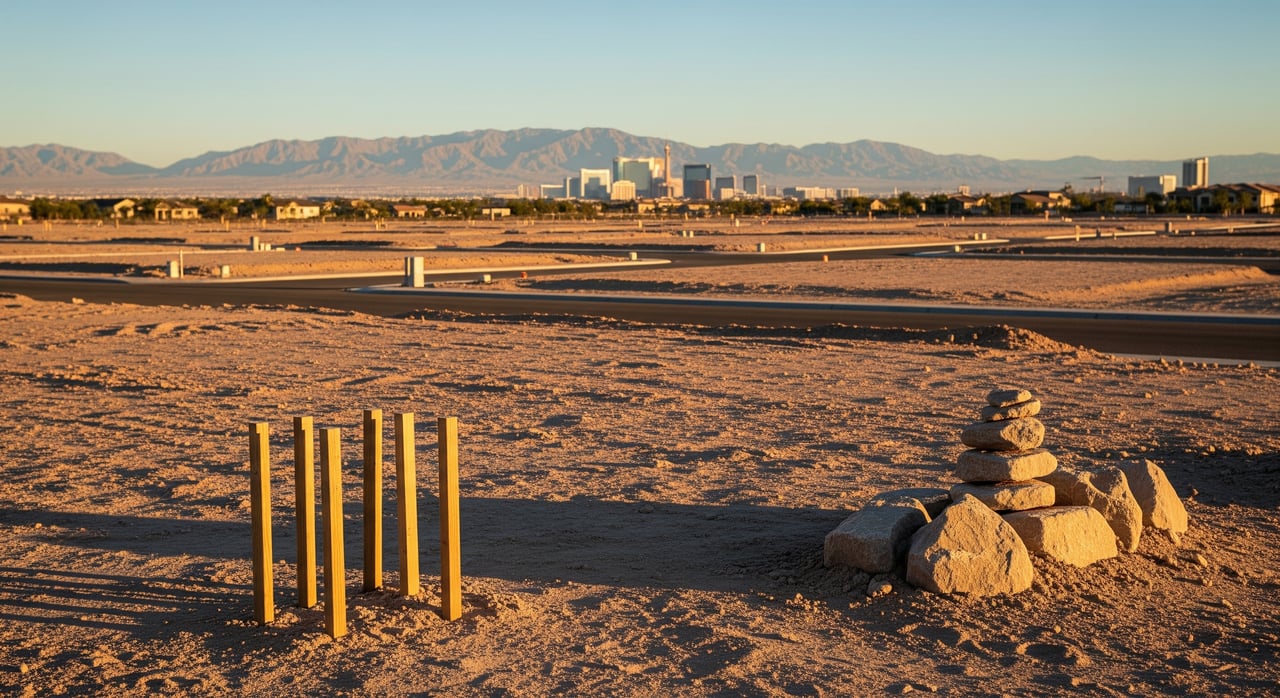
Thinking about buying land in Las Vegas and holding it for the right moment? Land banking can be a smart move if you understand how Clark County sets the rules. You want a clear path, predictable costs, and confidence about utilities and timing. In this guide, you’ll learn how to read the county’s playbook so you can evaluate parcels with less guesswork and more strategy. Let’s dive in.
What land banking means
Land banking is the practice of buying undeveloped land and holding it for a future use, sale, or entitlement. In Clark County, the value of a land bank play often comes from aligning a parcel with future zoning, securing access and utilities, and timing the market. Your edge comes from knowing where the county is heading and what it will require before a buyer or builder can move forward.
Read Clark County’s playbook
Start with two county documents that guide everything that follows:
- Clark County’s Master Plan. The Master Plan sets long-range policy and future land uses for unincorporated areas. It tells you whether higher density or different uses could be feasible in the future. Review the current plan and update materials on the county’s Comprehensive Planning site under the Transform Clark County effort. Visit the Master Plan overview.
- Title 30, the Development Code. Title 30 is the rulebook for zoning, subdivision, application steps, notices, fees, and approvals. It was updated in early 2024 and is your procedural guide through entitlements. Start with the Title 30 library.
Your entitlement path
While every parcel is different, most paths follow a similar sequence.
Pre-application research
Confirm the parcel’s current zoning and Master Plan category. Decide if you need a rezoning, land use amendment, parcel map, or a larger plan. Your goal is to match your investment timeline with the county’s process in Title 30.
Pre-application meeting
Meet with county planners and public works staff to flag utility extensions, frontage work, flood control needs, and any overlay constraints. This helps you avoid surprises and budget properly before you file.
File land-use applications
Depending on your strategy, you may submit a minor subdivision or parcel map, a major subdivision tentative map, a rezoning, a special use permit, or a specific plan for larger concepts. Title 30 outlines minor subdivision procedures and timing in §30.28.070.
Notices and hearings
Applications require notices and public hearings. Title 30 sets timelines, hearing bodies, and outreach requirements, including Town Advisory Board and Planning Commission, and in some cases the Board of County Commissioners. See hearing timelines in §30.16.240.
Conditions and final maps
Approvals often come with conditions. Common items include improvement plans, bonds, water or wastewater extension agreements, and drainage requirements. Final maps record after conditions are met. Improvement plan and bonding rules are in §30.28.130.
Permits and acceptance
Once maps are recorded and public improvements are accepted, you can pursue building permits. Flood control, stormwater, and roadway work often must be completed or bonded before occupancy or recordation.
Infrastructure and resource checks
A parcel’s upside depends on the gatekeepers below. Address these early.
- Water supply and rights. Most of Southern Nevada’s municipal water comes from the Colorado River, managed regionally by SNWA and delivered locally by LVVWD. New development must follow LVVWD service and commitment rules, and some larger projects require conservation agreements or water efficiency plans. Learn how the system works from the LVVWD overview. Nevada’s State Engineer can also limit new groundwater pumping. A 2024 Nevada Supreme Court ruling involving Coyote Springs affirmed that authority, which is a major constraint for large, groundwater-dependent plays. See reporting on the ruling in AP News.
- Sewer and treatment. For unincorporated areas, you will coordinate with the Clark County Water Reclamation District or the local sewer provider on capacity and connection requirements for your area.
- Flood control and drainage. The Clark County Regional Flood Control District sets regional hydrologic criteria and may require onsite detention or participation in regional facilities. Check the district’s role and planning context via the CCRFCD overview.
- Roads and off-site work. Expect frontage improvements, right-of-way dedications, traffic studies, and possible off-site road upgrades. These conditions are common in Title 30 and often appear in §30.28.130.
- Environmental and overlay areas. Title 30 maps include overlays near Red Rock, Spring Mountains, airport environs, slopes, and hydrologic basins. These can add studies or limit certain uses.
Costs, timelines, risks
- Fees and deposits. Application fees are only one part of the budget. Expect plan-check deposits, engineering and study costs, improvement construction, and bonding. Title 30’s fees chapter outlines application categories and fee structures.
- Timelines. Minor parcel maps can be processed in weeks to a few months when no major improvements are required, as outlined in §30.28.070. Larger rezonings, tentative maps, and specific plans often take many months to several years due to studies, hearings, improvement plan reviews, and construction. Title 30 sets hearing timelines in §30.16.240.
- Risk signals. Watch for water uncertainty, delayed regional drainage projects, and heavy off-site requirements. The groundwater precedent noted above shows how regional water constraints can affect large tracts even after local approvals.
Due diligence checklist
Use this quick list to evaluate a parcel’s potential before you buy or set a price.
- Verify parcel basics. Confirm APN, legal description, zoning, and Master Plan category.
- Pull title and recorded documents. Order a title commitment and search the county’s Recorder index for easements, covenants, liens, maps, and improvement agreements of record.
- Check assessed values and tax caps. Review parcel data and exemptions with the County Assessor.
- Ask utilities about capacity. Contact LVVWD for water and the sewer purveyor for wastewater service and any extension agreements.
- Review drainage and flood status. Confirm if regional detention or channel work is required in your area.
- Confirm off-site requirements. Ask Public Works about frontage, traffic studies, and bonding expectations early.
- Map your entitlement path. Identify whether you need a rezoning, land use amendment, or a tentative map, and plan your hearing sequence under Title 30.
- Build a realistic budget. Include studies, plan-check deposits, improvement construction, bonds or letters of credit, and conservation or mitigation contributions.
How we help
If you are evaluating acreage, ranch land, or a future homesite in Greater Las Vegas, you deserve an advisor who understands both lifestyle value and the county’s process. As a boutique, principal-led brokerage, we market land and lifestyle properties as experiences, not line items. For sellers, we pair strategic pricing with premium presentation that includes professional photography, video spotlights, targeted buyer outreach, and niche ranch and luxury distribution, with no upfront fees until close for certain services. For buyers, we help you read Title 30, triage utilities and drainage, and position your parcel for long-term value.
Ready to make a confident land decision in Clark County? Reach out to Elizabeth Fenley-Dixon for a private consultation.
FAQs
What is land banking in Clark County, Nevada?
- It is buying and holding undeveloped land with a plan to add value over time through zoning alignment, utilities, and timing the market for a future sale or build.
How long do Las Vegas parcel splits usually take?
- Minor parcel maps can process in weeks to a few months when conditions are simple, while larger maps and rezonings can take many months to years due to studies, hearings, and improvements.
Who decides if my land can get water service?
- Retail water is handled by LVVWD or another local purveyor, and large groundwater plans are subject to the Nevada State Engineer’s authority to limit pumping for public interest and environmental reasons.
What are the biggest development constraints near Las Vegas?
- Water availability and commitments are often the main constraint, followed by drainage and required off-site infrastructure that can add cost and time.
Where do I check taxes, liens, and recorded covenants on a parcel?
- Use the County Assessor for parcel and tax details and the County Recorder’s index for recorded deeds, maps, easements, liens, and covenants of record.