Craving big-sky miles and sandstone views you cannot find back home? If you ride, the Las Vegas valley is a rare mix of desert basins, red rock canyons, and cool alpine meadows just a short haul from the city. You may be comparing desert riding to the grass and dirt you know. This guide shows you where to ride, when to go, what to pack, and how to check the rules before you trailer out. Let’s dive in.
The lay of the land
Las Vegas sits next to a mosaic of public lands with different rules. The Bureau of Land Management, National Park Service, U.S. Forest Service, and U.S. Fish & Wildlife Service each manage areas you can ride. Always confirm current regulations, fees, and trail access with the managing agency before you go.
Expect a range of footing. You will see sandy washes and packed desert dirt in the lowlands, smooth and sharp sandstone in Red Rock, and pine forest singletrack up high in the Spring Mountains. Many trailheads are 20 to 60 minutes from the Strip, so day rides are easy to plan.
Best equestrian riding areas near Las Vegas
Red Rock Canyon National Conservation Area (BLM)
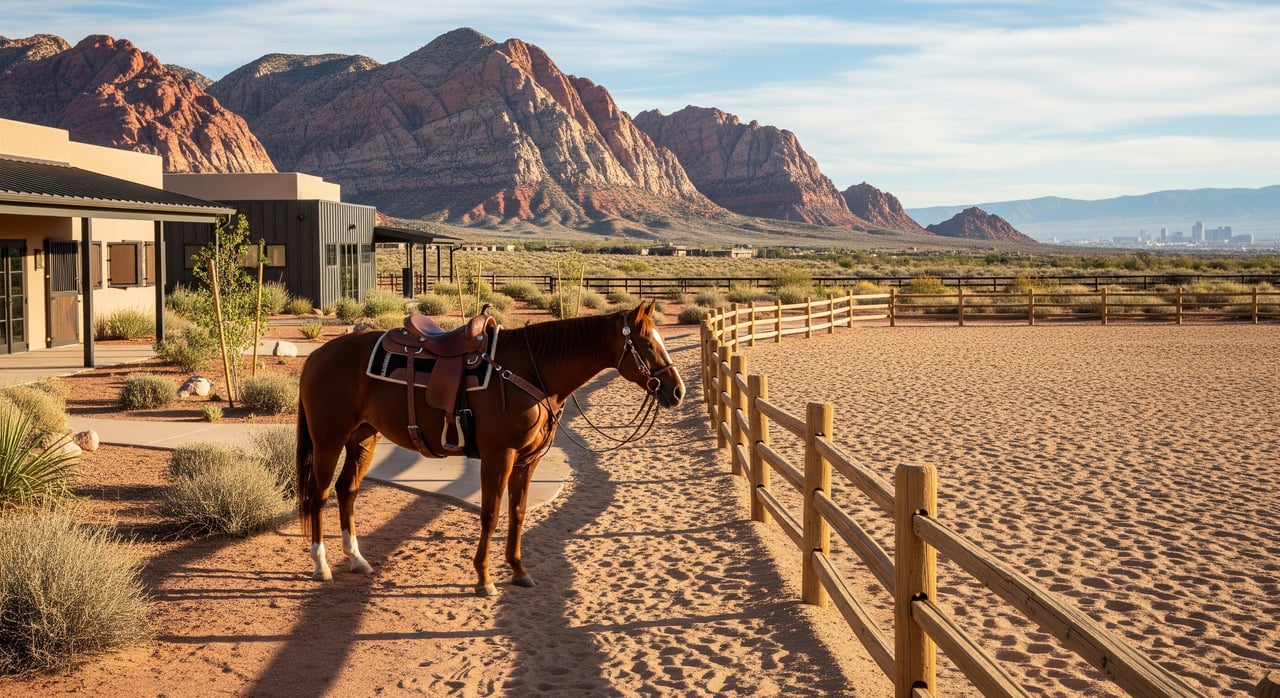
Why riders go: iconic red sandstone, classic Mojave views, and quick access from the west side of town. Short day rides are common, though backcountry travel is possible with careful planning. Hoof protection helps on the rocky surfaces.
Access and parking: you can stage from several pullouts and trailheads along State Route 159. Trailer spaces are limited and fill fast on weekends. Vehicle entrance fees apply on the Scenic Drive. Check the current conditions, fees, and stock rules on the official page for Red Rock Canyon National Conservation Area.
Safety notes: start early in summer, watch for flash flooding in washes during monsoon, and expect spotty cell coverage in parts of the conservation area.
Spring Mountains / Mount Charleston (U.S. Forest Service)
If you want shade and cooler air, head to the high country. The Spring Mountains offer pine and aspen forests, mountain meadows, and moderate to steep climbs. Kyle Canyon and Lee Canyon provide access to designated equestrian routes and forest roads.
Parking varies by trailhead and can be tight at popular spots. Winter brings snow and ice, and spring can be muddy after melt. For allowed trails, parking details, and any seasonal closures, start with the Spring Mountains National Recreation Area page.
Lake Mead National Recreation Area (NPS)
Lake Mead’s wide-open desert, washes, and shoreline corridors are great for long loops away from neighborhoods. Sand and gravel can be tiring, so plan distances that match your horse’s conditioning. Shoreline areas can reflect heat, so timing matters.
Staging may be allowed at certain boat launch areas, but rules and capacity vary by site and season. Water for horses is not reliable along routes. Review current regulations, access points, and any permits on the Lake Mead National Recreation Area site.
Desert National Wildlife Refuge (USFWS) and nearby BLM lands
Looking for solitude and big landscapes north of town? The Desert National Wildlife Refuge offers remote desert routes with long distances between water, shade, and services. Some roads require high clearance, and infrastructure is limited.
Rules for livestock and parking vary and can change to protect sensitive habitat. Always check maps and access updates with the refuge before your trip. Start with the Desert National Wildlife Refuge page for guidance and contacts.
Sloan Canyon National Conservation Area (BLM)
Close to the southeast valley, Sloan Canyon offers classic Mojave terrain and broad desert vistas. Cultural resources, including petroglyphs, are present, so stay on allowed routes and respect posted protections.
Parking is limited at some trailheads, and congestion is common on weekends. Review current access information and use guidelines on the Sloan Canyon National Conservation Area page.
When to ride each season
- Summer: the valley often exceeds 100 degrees. Ride at dawn or near sunset at low elevations. Consider higher, cooler routes in the Spring Mountains. Heat safety comes first.
- Fall: cooler days and stable footing make this a prime desert season. Expect popular trailheads to fill quickly on weekends.
- Winter: low elevations stay mild while Mount Charleston holds snow. Many forest roads and trails need winter driving readiness and sometimes chains.
- Spring: wildflowers can be good at certain elevations. Expect muddy or soft sections up high after snowmelt.
For weather hazards and alerts, check the National Weather Service Las Vegas before you go.
Desert trailcraft essentials
A great ride here starts with the right prep. Use this checklist to protect your horses and your day.
- Water and hydration
- Carry ample water for horses and riders. Many routes have no reliable sources. In hot conditions, a horse may need 10 to 15 or more gallons per day depending on exertion.
- Plan conservative distances if you cannot resupply en route.
- Hoof care and tack
- Sandstone and sharp rocks are tough on bare feet. Consider shoes or protective boots. Thin pads can bruise on rock.
- Inspect cinches, breast collars, and straps often. Dust and grit wear gear faster.
- Heat stress and timing
- Avoid midday rides in summer. Watch for heavy sweating, rapid breathing, or weakness. Electrolytes and salt help when sweat loss is high.
- Navigation and communication
- Bring a map, compass or GPS, and know your route. Leave your plan with someone. Expect patchy cell coverage away from the valley.
- Trailer and parking strategy
- Arrive early. Many trailheads have limited trailer slots. Weekdays are often easier.
- Use wheel chocks on slopes and avoid leaving animals unattended for long periods.
- Leave No Trace and cultural respect
- Pack out manure and bedding where required. Avoid cryptobiotic soils, stay off cultural sites, and follow posted rules.
- Biosecurity
- Clean trailers, boots, and tack before and after rides to limit the spread of invasive weeds.
Local support and updates
You will find equine veterinarians, farriers, and feed stores across the metro area, with the best coverage in the southern valley. For remote rides, plan emergency contacts and transport options ahead of time.
Clubs and volunteer groups in Southern Nevada share ride calendars and trail updates. They are a helpful way to learn staging areas, local etiquette, and seasonal tips. Always cross-check social posts with agency notices for closures and fire restrictions.
Use official pages for the latest status, closures, and fee updates for each area you plan to ride. The BLM, NPS, USFS, and USFWS links above are your best starting points.
Thinking about a horse property in Clark County?
Yes, it is realistic to keep horses on acreage here. The key is choosing the right property and location. As you search, look closely at water access, turnout size, fencing, zoning and HOA rules, and proximity to services. Also consider your haul time to the trailheads you plan to use most.
If you want a home that fits your riding lifestyle, from arena space to trailer parking, reach out for local guidance and options across Greater Las Vegas. Connect with Elizabeth Fenley-Dixon for a personalized plan.
FAQs
Do you need a permit to ride public lands near Las Vegas?
- Most day rides on BLM, USFS, and NPS lands do not require horse-specific permits, but entrance fees, temporary rules, wilderness limits, or closures can apply. Always check the managing agency before you go.
Where can you park a horse trailer overnight around Las Vegas?
- Rules vary by site. Some national forest trailheads and campgrounds allow overnight trailers, while many desert pullouts do not. Call the land manager of the area you plan to use to confirm.
How is desert riding different from pasture regions?
- Expect more rocky and sandy footing, less grass, and bigger temperature swings. Summer rides are shorter and need more hauled water and hoof protection. Higher mountain routes offer cooler, shaded options.
What seasons are best for riding near Las Vegas?
- Fall and spring are prime at low to mid elevations. Winter is mild on the valley floor but snowy up high. In summer, ride very early or choose higher elevations.
How much water should you plan for your horse?
- In hot conditions, plan for 10 to 15 or more gallons per horse per day depending on size and workload, plus your drinking water. Many routes have no reliable sources.
Are guided or group rides available for newcomers?
- Yes. Local equestrian clubs and some outfitters host group and guided rides. Joining a club is a great way to learn trail etiquette and staging areas.
What are the main safety hazards when riding desert trails?
- Heat and dehydration, sharp and rocky footing, flash flood risk in washes during monsoon, and gaps in cell service. Carry emergency supplies and leave an itinerary.